hours left for
same day shipping


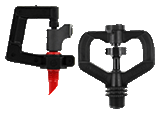
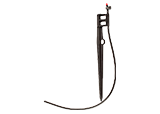
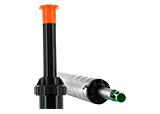
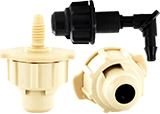
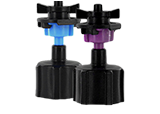
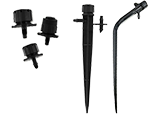
Sprinkler Warehouse carries an extensive selection of professional-grade drip emitters and sprays designed to meet the demands of your irrigation system and property. If you’re looking for precise control with adjustable spray jets or the convenience with micro pop-up sprayers, we have all you could ever need or want. Our inventory includes a wide range of styles, ensuring you can find the perfect solution for any application. From efficient PC emitters to versatile micro foggers, each irrigation emitter is crafted to deliver reliable performance and efficient water usage. Explore our variety of drip emitters and sprays today and build your irrigation system with the best in the industry.
According to landscape professionals, choosing the wrong parts often ruins water conservation efforts. A one-size-fits-all approach usually fails because pushing out too much water creates muddy puddles, while too little leaves hidden dry spots around roots. Understanding flow rate—measured in Gallons Per Hour (GPH)—solves this by matching exact moisture levels to specific plants.
To calculate the flow rate of a drip zone, add up the output of every emitter on that line:
This quick sum also tells you whether your water source can support the zone without a big pressure drop.
Finding the perfect match comes down to three basic factors: your plant's daily thirst, your soil type, and whether your yard has a slope. By exploring different types of drip irrigation emitters, you can easily customize your entire backyard. Soon, you will know exactly which drip irrigation emitters keep your tomatoes happy without flooding the patio.
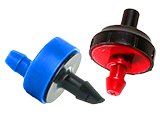
Button Drip Emitters
· Best use cases: Container plants and hanging baskets; individual shrubs and perennials with irregular spacing; small landscape zones where you want “one emitter per plant” control.
Pressure Compensating (PC) Emitters
· Best use cases: Hillsides and terraced beds; long drip lines where pressure drops toward the end; mixed-elevation landscapes where consistent watering matters more than lowest upfront cost.
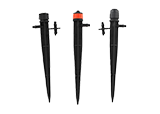
Adjustable Drip Emitters (Including Adjustable Micro-Stream Drippers)
· Best use cases: Shrubs and ornamentals that will grow significantly over time; mixed plantings where different plants on the same line need different outputs; trial-and-error tuning in new garden beds when you are still learning your soil’s wetting pattern.
Choose drip irrigation emitters based on your plants' water needs, soil type, and system layout. Higher-flow emitters are suitable for plants with greater water requirements, while low-flow emitters work best for sandy soils or smaller plants.
Drip emitters and irrigation drippers are essentially the same, both designed to release water at controlled rates in drip irrigation systems. However, "drippers" often refer to emitters used in smaller-scale applications like container gardening, while "drip emitters" may be used for larger, in-ground systems.
Drip emitters should be replaced every 3-5 years, depending on water quality, usage, and environmental conditions. Regular inspection for clogs, leaks, or reduced flow rates can help determine when replacement is necessary to maintain effective irrigation.
Yes, many drip line emitters are adjustable, allowing you to change the flow rate to meet the specific needs of your plants. Adjustable emitters are ideal for gardens with many different plant types, as they allow precise control over water delivery to different zones.
GPH stands for gallons per hour and tells you how much water a drip emitter delivers in one hour. For example, a 1 GPH emitter supplies about one gallon of water per hour under its rated operating conditions. Choosing the right GPH depends on your watering needs. Lower-flow emitters are often useful for smaller plants or slow-draining soils, while higher-flow emitters can provide more water to larger plants or areas with fast-draining soil.
Yes, and different flow rates may even be necessary when plants have different watering needs. For example, a larger shrub may use a 2 GPH emitter while a smaller plant uses a 0.5 or 1 GPH emitter. Remember that you’ll need to keep the system’s total flow within the capacity of the water source and pressure regulator.
Yes, pressure-compensating drip emitters are ideal for uneven terrain because they deliver a consistent flow rate regardless of elevation changes or water pressure variations. This ensures that all plants receive the same amount of water, even in hilly or sloped areas.