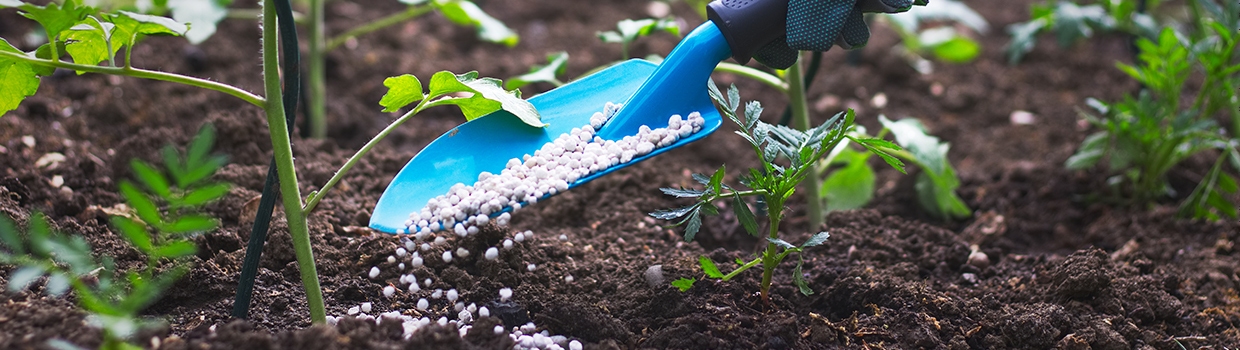
Unlock the secret to a vibrant and flourishing garden with Sprinkler Warehouse's premium selection of garden fertilizers. Our scientifically formulated fertilizers nourish plants, enhance soil health, and promote vigorous growth for backyard vegetable gardens, flower landscapes, or healthy lawns, making them key in achieving lawn perfection. Our selection also features organic fertilizers for natural soil enrichment and controlled-release formulas. Discover how the right fertilizer can transform your garden into a thriving ecosystem with Sprinkler Warehouse.
Please re-enter quantity based on the required multiple
You are attempting to add items with a quantity which is not a multiple of the item's purchase quantity
Item # {partNumber} is sold in multiples of {minpackQty} {uom}
The quantity will be rounded up to {currQty} {uom} in your cart.
Do you want to proceed?
Why Organic Fertilizer for Vegetable Gardens
Benefits of Organic Garden Fertilizer
Fertilizers assume an important role in growing fruits and vegetables, but with so many options available, deciding can become unwieldy. One of the best ways is through organic vegetable fertilizer. Whether granular or liquid, organic fertilizer offers a slew of advantages for vegetables. Why do many experts recommend organic fertilizers for vegetables?
Improved Soil Structure: Organic fertilizers don’t form a crust on the soil surface that you see with synthetic fertilizers.
Pest Resistance: The improved soil ecosystem generates stronger, more vigorous plants that are more resistant to pests and diseases.
Enhanced Food Quality: Along with fertilizer-wide nitrogen, phosphorus, and potassium nutrients, organic fertilizers offer essential micronutrients like calcium and magnesium that contribute to healthier vegetables.
When to Apply Fertilizer to a Vegetable Garden
The best time to apply fertilizer to a garden depends on the type of plants and their growing season. Fertilizer can be added before planting for soil preparation or during the growing process to promote further fruit growth. As your plants continue to grow, you can add more fertilizer mid-season, especially for heavy-feeding vegetables that benefit from additional nutrients during flowering and fruiting. Just try to avoid fertilizing before heavy rain to prevent runoff and nutrient loss.
Let’s Grow! How to Fertilize Raised Garden Beds
When to Fertilize
Early spring and fall
Fertilizer Type
For steady, consistent nutrients, use slow-release organic granular fertilizer (5-1-5). For quick fixes, try Grow More Bio-Cozyme liquid fertilizer.
Avoid Stem Contact
Apply granular fertilizer 2 to 3 inches away from plant stems to avoid burning.
Weed & Feed = NO
For raised vegetable gardens, never use products with weed killer.
Use Correct Fertilizer
Since raised beds drain faster, they usually require consistent nutrition. It’s best to perform a garden soil test to ensure you’re giving your plants or produce the right stuff.
To ensure healthy outcomes, vegetable gardens typically require fertilization every 3 to 4 weeks if using granules and every 2-4 weeks if using liquid fertilizer, though the type and regional climate should be considered.
Is flower fertilizer different from garden fertilizer?
Yes, flower fertilizer is different from general garden fertilizer, mainly in its nutrient ratios (NPK). Flower fertilizer contains more phosphorus (middle number) and potassium (third number) to boost flower production, root strength and plant health. General garden fertilizer, on the other hand, is usually more balanced or nitrogen-heavy for foliage growth.
What are the primary nutrients in fertilizers?
The primary nutrients in fertilizers are nitrogen (N), phosphorus (P), and potassium (K), often referred to as the N-P-K nutrients. Nitrogen is especially beneficial for leaf and stem growth, phosphorus for root development, and potassium for overall plant health.
Should I use organic or synthetic fertilizer?
If you need quick growth or are managing a garden with specific nutrient deficiencies, synthetic fertilizers can offer more immediate results. However, many gardeners choose to combine both, using organic garden fertilizer to improve soil health while supplementing with synthetic fertilizers when fast growth is needed.
How much fertilizer should I add to my garden?
This can vary depending on the plants, the condition of the soil, and the type of fertilizer that you’re adding. Always follow the instructions on the fertilizer label. In general, granular fertilizers call for up to 1–2 pounds per 100 square feet for most vegetables and plants. Liquid fertilizers are usually around 1–2 tablespoons per gallon of water. Some crops like tomatoes, peppers, and corn may need more frequent or higher fertilizer application.
Sign Up For Specials & Exclusive Discounts
Delivered directly to your inbox.
By inputting your email you agree to receive recurring promotional marketing emails from Sprinkler Warehouse.