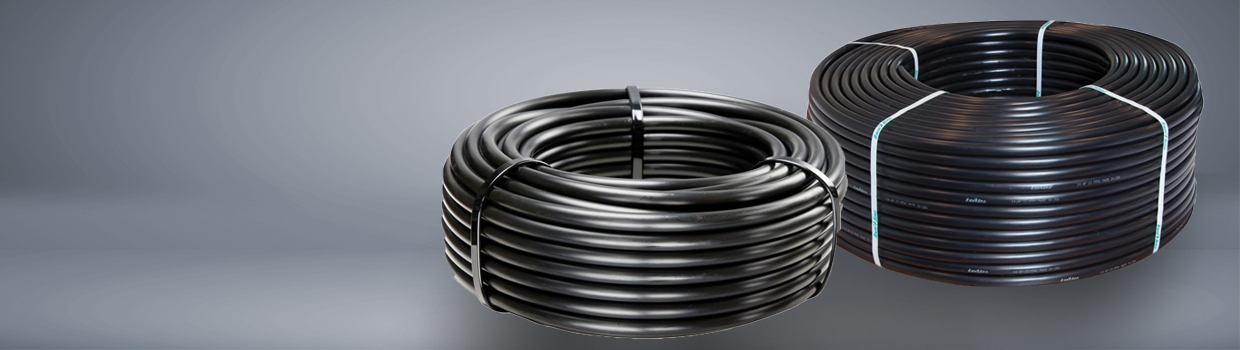
Supply tubing is typically used as the main water line in a drip irrigation system. Polyethylene irrigation pipe runs from your faucet or water source and carries water to the planting area. In some setups, smaller distribution or emitter tubing is then connected to the supply line to deliver water directly to plants. At Sprinkler Warehouse, you can shop for different sizes of poly sprinkler tubing to construct your main lines and feeder lines. Order online today for fast shipping.
Please re-enter quantity based on the required multiple
You are attempting to add items with a quantity which is not a multiple of the item's purchase quantity
Item # {partNumber} is sold in multiples of {minpackQty} {uom}
The quantity will be rounded up to {currQty} {uom} in your cart.
Do you want to proceed?
Using Poly Tubing
Poly sprinkler tubing usually serves as the main water supply line that distributes water to plants. It is typically connected to a water source, such as a spigot, valve, or pump, and branches out to different irrigation zones. Once all of the pieces are connected, you can lightly bury or mulch over the tubing for protection and a cleaner look. Alternatively, the tubing can also be secured with stakes, to keep it from moving around. Overall, poly tubing acts as the backbone of a drip irrigation system, delivering water directly to plant roots while minimizing waste.
Poly Tubing FAQs
What sizes does poly supply tubing come in?
Poly supply tubing for drip irrigation typically comes in several standard sizes, with the most common being ½ inch and ¾ inch. ½ inch is the most commonly used size for main supply lines in home irrigation systems. ¾ inch is used for higher water flow needs or larger irrigation systems.
Is poly supply tubing the same as drip tubing?
Poly supply tubing and drip tubing are similar but not exactly the same. Poly tubing usually serves as the main distribution line in a drip irrigation system, while drip tubing delivers water directly to the plants. Many drip irrigation systems will use both types of tubing.
Can poly tubing be buried underground?
Yes, poly tubing and sprinkler pipes can be buried underground. To ensure their longevity and continued efficiency, bury the tubing no deeper than 6 inches. Also, try to avoid placing it in areas with heavy foot traffic or where digging may occur. If necessary, you can place certain sections of your tubing inside a PVC pipe for extra protection.
Does poly tubing require special fittings?
Yes, poly tubing specifically requires drip irrigation fittings to create secure, leak-free connections. These fittings are typically either barbed or compression-style and are designed for use with polyethylene tubing. Barbed fittings are inserted into the tubing and are held in place by the tubing’s natural elasticity, while compression fittings slide over the tubing and tighten to create a seal. Both types are easy to install without the need for glue or clamps.
How much poly tubing do I need for my irrigation system?
The amount of polyethylene irrigation pipe you need depends on the size of the area you're watering. You can start to calculate how much poly sprinkler pipe you’ll need to order by sketching a simple layout of your garden or landscape. Consider how many rows of line you’ll need and the distance between each section of your garden. It’s a good idea to purchase 10 to 20% more tubing than your measurements suggest to allow for future expansions or replacement.
Sign Up For Specials & Exclusive Discounts
Delivered directly to your inbox.
By inputting your email you agree to receive recurring promotional marketing emails from Sprinkler Warehouse.