Trust Guard Security Scanned
hours left for
same day shipping
hours left for
same day shipping
Loading...

What are PVC Lock Tools Used For?

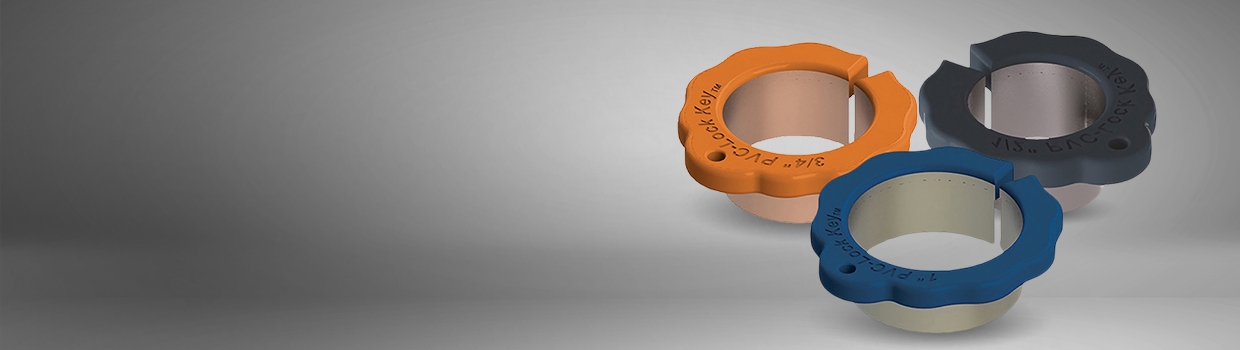
At Sprinkler Warehouse, we have a couple of different PVC lock tools with slightly different functions. The PVCL-BVL-TOOL is a pipe beveling tool, designed to slightly shave or bevel the end of a PVC pipe before inserting it into a push-to-connect fitting. This process eases installation by allowing the pipe to slide smoothly into the fitting. In addition, we also supply a few varieties of PVC lock release tools, like the Hydro-Rain PVCL-RTL-050. These tools are specifically designed to release installed push-to-connect fittings from PVC pipe.

PVC Bushings FAQs

Do I need a PVC beveling tool to install PVC lock fittings?

While a PVC beveling tool isn’t absolutely required to install PVC-Lock fittings, it is highly recommended. Beveling the end of the pipe creates a smooth, angled edge that makes it much easier to insert into the push-to-connect fitting. This speeds up installation while protecting the O-ring inside the fitting from being damaged by a sharp, square-cut pipe edge.

What types of fittings does the PVC lock release tool work on?

A PVC-Lock release tool is designed specifically for PVC-Lock push-to-connect fittings made by Hydro-Rain. These include couplings, elbows, tees, crosses, adapters, and other fittings in the PVC-Lock line that use a stainless-steel retainer ring and O-ring seal to grip the pipe. The release tool compresses the retainer ring inside the fitting, allowing you to easily remove the pipe without damaging either component. It will not work on traditional glued PVC fittings or other brands of push-to-connect systems that use a different design.

Will removing a fitting damage the pipe or fitting?

Removing a PVC-Lock® fitting with the proper release tool will not damage the pipe or the fitting. The release tool is designed to compress the stainless-steel retainer ring inside the fitting, which loosens its grip on the pipe so it can slide out smoothly. However, if you try to force removal without the release tool, you risk damaging the fitting, the pipe, or both.