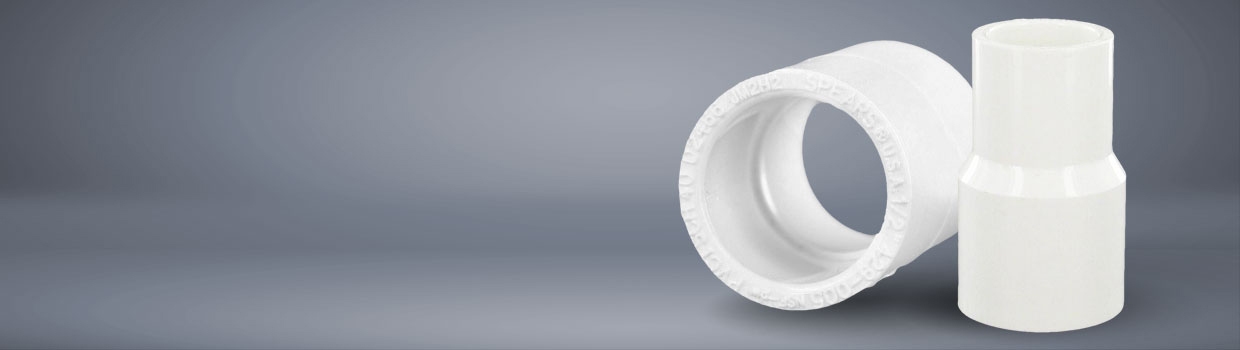
PVC couplers are for making connections with PVC pipe. Our durable PVC pipe couplings are available with slip to slip, threaded, and reducing connections. The PVC coupler fittings are ideal for sprinkler system installations, where long runs of PVC pipe are made using coupling fittings.
Please re-enter quantity based on the required multiple
You are attempting to add items with a quantity which is not a multiple of the item's purchase quantity
Item # {partNumber} is sold in multiples of {minpackQty} {uom}
The quantity will be rounded up to {currQty} {uom} in your cart.
Do you want to proceed?
How to Install a PVC Coupling
Installing a PVC coupling is relatively straightforward, but the process will vary depending on the type of connection. Once you cut and deburr your PVC pipes, dry-fit the PVC coupling onto the pipe to ensure it fits properly. For most slip couplings, you’ll also want to apply PVC cement. Apply PVC cement to the outside of the pipe ends and the inside of the couplings. Push the pipe into the coupling (or twist with a threaded connection) and wipe off any excess cement. Once the cement cures, test the connection by turning on the water.
Compression Coupling or Glued PVC Coupling?
Choosing between compression couplings and glued PVC couplings comes down to whether you need a permanent solution or a faster, easier-to-remove connection. Most sprinkler pros try to use glued PVC couplings for permanent sprinkler repairs. They create a strong, watertight connection and are a good choice for both mainlines and lateral lines. Still, compression couplings are helpful when you need a quick repair. They don’t require glue, so they can be easier to install in tight spaces or when the pipe is slightly wet. In general, choose glued couplings for permanent installations and compression couplings for convenience.
PVC Coupling FAQs
What are the most common types of PVC couplings?
Slip couplings and threaded couplings are connectors used to join two pieces of PVC pipe of the same diameter. Where slip couplings are smooth, threaded couplings use a threaded connection on each end. A compression coupling uses a compression ring and nut to secure the connection. Flexible couplings, elbow couplings, and reducing couplings are also rather common.
Can PVC couplings be used underground?
Standard PVC couplings (Slip, Threaded, and Reducing) are all appropriate for underground use, as long as they are installed properly. Use schedule 40 or schedule 80 PVC pipes and fittings, as these are rated for pressure and durability. PVC cement will also help create a lasting connection and a leak-proof seal.
How long should PVC glue dry before turning the sprinklers back on?
When installing PVC couplings in a sprinkler system, it’s best to let the PVC cement dry for at least 2 hours before turning the water back on. Cool or damp weather can slow curing, and larger pipes usually need more time. For the safest result, check the cure time listed on your PVC cement can.
Can a PVC coupling be removed and reused?
Most PVC couplings cannot be removed and reused once they have been glued in place. PVC cement works by softening and bonding the pipe and fitting together, so the coupling becomes a permanent part of the pipe. If you need to fix or change that section, the usual solution is to cut out the old coupling and install a new one.
What is the difference between Schedule 40 and Schedule 80 PVC couplings?
The difference between Schedule 40 and Schedule 80 PVC couplings lies primarily in the thickness of the pipe walls and their pressure ratings. Schedule 80 PVC has thicker walls than Schedule 40 and provides greater resistance to pressure and physical damage. This also means that Schedule 80 PVC has a higher pressure rating.
Sign Up For Specials & Exclusive Discounts
Delivered directly to your inbox.
By inputting your email you agree to receive recurring promotional marketing emails from Sprinkler Warehouse.