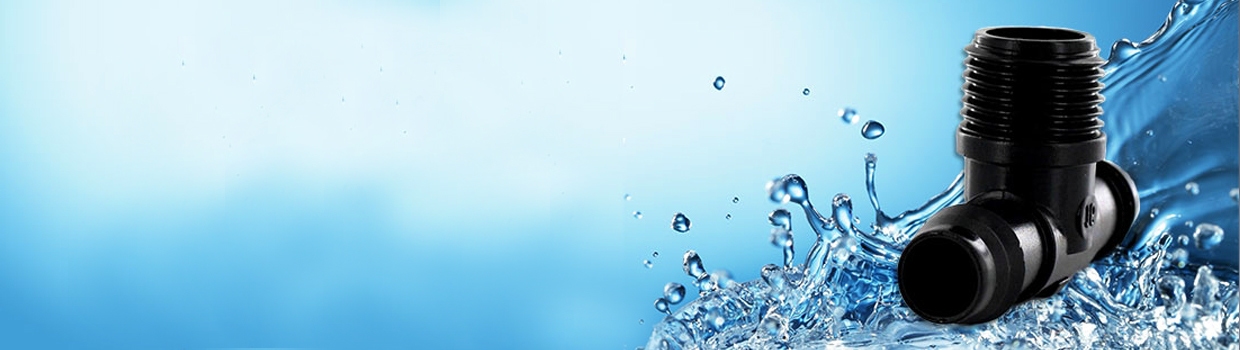
These barb fittings are made from UV resistant, high impact plastics. Use for secure and easy installation without glue. Made for use specifically with 1/2" pipe. Stock up on all the most popular fittings so you will always have the perfect piece right when you need it.
Please re-enter quantity based on the required multiple
You are attempting to add items with a quantity which is not a multiple of the item's purchase quantity
Item # {partNumber} is sold in multiples of {minpackQty} {uom}
The quantity will be rounded up to {currQty} {uom} in your cart.
Do you want to proceed?
Common Uses for 1/2" Barb Fittings
1/2" barb fittings are versatile components in irrigation systems, commonly used to connect tubing or other components to the system. They can connect the mainline to secondary lines that feed water to drip emitters or micro sprayers. If you’re creating branching water lines, some fittings are shaped specifically for multiple outputs. They can also connect irrigation lines to valves or manifolds, making them essential for creating more robust setups.
1/2" Barb Fitting FAQs
What are common types of 1/2 inch barb fittings?
1/2 inch PVC barbed fittings come in all shapes and sizes, including elbow barb fittings, tee barb fitting, straight barb fitting, coupling barb fitting, and end caps. Each type of fitting is designed for specific functions in irrigation, such as joining hoses, avoiding obstacles, or dividing water into two different zones.
Can barbed fittings be used in high-pressure systems?
Barbed fittings can be used in high-pressure systems, but you may need to use a hose clamp to secure the connection tightly. For very high-pressure applications, you may need to choose fittings specifically designed for high-pressure use.
What is the difference between 1/2" barb and 1/2" threaded fittings?
A 1/2-inch barb fitting connects to flexible irrigation tubing by pushing the tubing over the ridged barb. These fittings are commonly used with polyethylene tubing and may require a clamp. A 1/2-inch threaded fitting connects to a matching male or female threaded pipe, valve, sprinkler, or adapter. Threaded fittings are typically used with rigid pipe or components that have threaded ports.
Do 1/2" barb fittings need clamps?
Many 1/2-inch barb fittings are designed to create a tight seal when pushed fully into polyethylene tubing, but clamps can provide extra security. Clamps may be necessary on higher-pressure systems and older tubing. For low-pressure drip irrigation, clamps may not be necessary if the fitting and tubing are correctly matched.
Can you connect two different sizes of irrigation tubing with a barb fitting?
You can connect different sizes of irrigation tubing by using a reducing barb fitting. For example, a 3/4-inch-to-1/2-inch reducing barb can join larger poly tubing to a smaller line. Just make sure each barb matches the tubing’s inside diameter and pressure rating.
How do you remove a barbed fitting from tubing?
To remove a barbed fitting, first shut off the water and relieve pressure in the line. If the fitting is clamped, remove the clamp and twist the tubing gently while pulling it off the barb. For old or damaged tubing, it is often easier to carefully cut the tubing near the fitting and peel it away without damaging the barb.
Are barbed fittings reusable?
Barbed fittings can be reused, but they might lose their ability to create a tight seal after several uses, especially if the inserts become worn or damaged. If you notice leaks or reduced performance, it's a good idea to replace the fitting or tubing.
Sign Up For Specials & Exclusive Discounts
Delivered directly to your inbox.
By inputting your email you agree to receive recurring promotional marketing emails from Sprinkler Warehouse.