Trust Guard Security Scanned
hours left for
same day shipping

hours left for
same day shipping

Loading...

Types of Controllers and Products

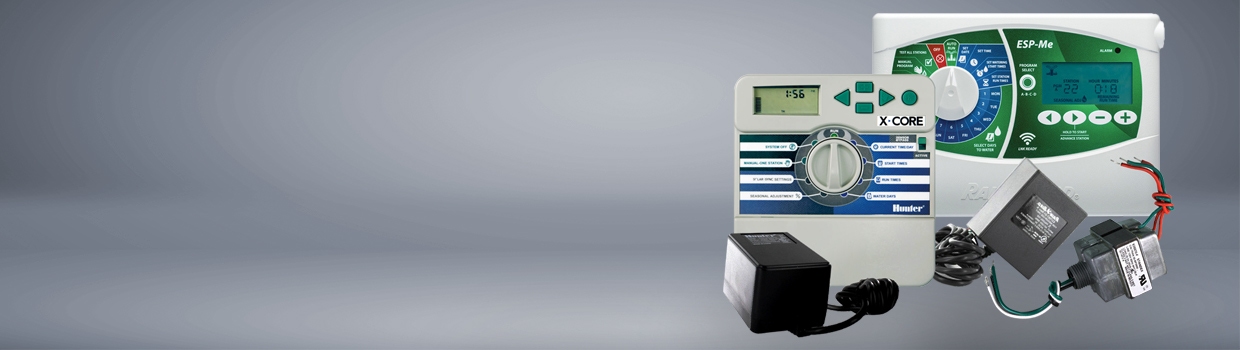
To accommodate homes and businesses of all kinds, Sprinkler Warehouse supplies all kinds of sprinkler system controllers & replacement parts. We have a variety of digital controllers, smart controllers that connect to Wi-Fi, zone-based controllers for large properties, and even battery-operated controllers for remote setups. Plus, you can keep your gear in top shape with replacement front panels, batteries, and all kinds of other irrigation controller parts on our website!


Safely Repairing a Sprinkler Controller

You can safely repair your own sprinkler controller, but make sure to take a few precautions. 

  • Turn off the power at the breaker before opening the controller.

  • Take photos of wiring before disconnecting anything so you can restore it correctly.

  • Keep the area dry and avoid working in wet conditions.

  • Use insulated tools and wear basic protective gear like gloves.

  • Check for obvious issues, like loose wires and blown fuses, before replacing parts.

If you’re unsure about electrical components or see damaged wiring, it’s safer to consult a licensed electrician rather than risk shock or further damage.

Sprinkler Controller Repair FAQ

How long should a sprinkler controller last?

Most sprinkler controllers should last for 5 to 10 years or more, depending on how well they are maintained. Plus, by keeping up with any necessary sprinkler controller repairs, you can avoid having to replace it altogether. When you are ready for a new sprinkler controller or timer, you can save by ordering on our website.

What are the signs that a sprinkler controller needs to be repaired?

If your sprinkler system controller starts malfunctioning, it can lead to either overwatering or underwatering your lawn and garden. There are a few signs that you’ll need to repair your sprinkler controller, such as unresponsiveness, some sprinkler zones do not turn on as scheduled, or your water bill spikes unexpectedly.

How do you fix a sprinkler controller that won’t power on?

If a sprinkler controller won’t turn on, start by checking the power source. Ensure it’s plugged in and that the outlet is working. Many controllers also have an internal fuse that you’ll need to replace if it’s blown. If the unit still won’t turn on, the internal circuitry may have failed, and replacing the controller is usually the most practical solution.

Do different brands use different repair parts?

Most sprinkler controller brands use their own specific repair parts, and they are not always interchangeable. Components like transformers, faceplates, wiring terminals, and internal circuit boards are typically designed for that brand’s models. Even within the same brand, parts may vary by series. Some universal items can be replaced across brands, but for the best results, always match the exact model number when looking for replacement parts.

How do I test if my controller is sending power to the valves?

To test your irrigation controller, use a multimeter set to measure AC voltage. At the controller, place one probe on the common terminal and the other on the active zone terminal while that zone is running. You should read around 24 volts AC. If there’s no voltage, you may have an issue with your controller or wiring. You can also perform a test at the valve wires in the field to confirm power is reaching the solenoid.

When should I replace my controller?

You should consider replacing your irrigation controller if it’s frequently malfunctioning or no longer powers valves reliably. Signs like unresponsive zones or visible damage often indicate it’s nearing the end of its life. Upgrading can also give you access to smart features like weather-based scheduling and remote control.

Can you repair a sprinkler controller yourself?

Some common problems are relatively simple to fix, while others may require more advanced troubleshooting or professional help. You should always start by checking the power supply and resetting the controller to see if that fixes your problem. If the controller has internal electrical problems you can't diagnose, you may need to contact a professional.