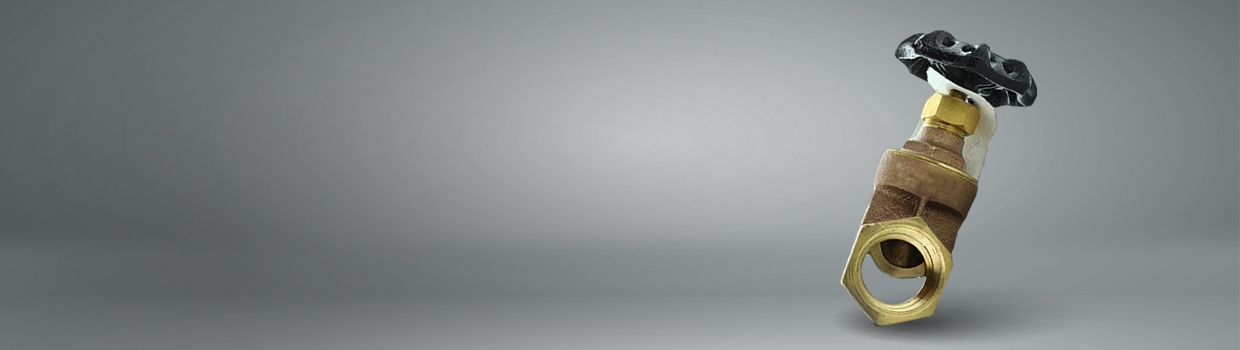
Gate valves are used to start or stop the flow of water in a system. They operate by raising or lowering an internal gate or wedge that blocks or opens the flow path. Because they are designed primarily for fully open or fully closed positions, gate valves are best suited for on/off control rather than regulating flow. As such, they are especially useful for isolating sections of a system during repairs or maintenance. Order from our selection of irrigation gate valves at Sprinkler Warehouse today.
Please re-enter quantity based on the required multiple
You are attempting to add items with a quantity which is not a multiple of the item's purchase quantity
Item # {partNumber} is sold in multiples of {minpackQty} {uom}
The quantity will be rounded up to {currQty} {uom} in your cart.
Do you want to proceed?
How Do Gate Valves Work?
Gate valves work by using a gate inside the valve body that moves vertically to either allow or stop the flow of water. When you turn the valve, the gate raises out of the flow path. This creates an open passage, allowing water to flow freely through the valve. Turning the valve in the opposite direction causes the gate to lower into the valve body, where it fits tightly against the seat, blocking the flow of water completely. Gate valves are designed to be either fully open or fully closed. When they are partially open, they can cause turbulent flow and are not ideal for flow regulation.
Attaching a Gate Valve
To attach an inline gate valve to an irrigation system, first shut off the water and relieve pressure from the line. For many sprinkler systems, the valve will connect to PVC or poly pipe using threaded adapters. Wrap the male threads with PTFE tape and thread the adapters into the brass valve. After tightening, cut the irrigation pipe where the valve will be installed, clean the pipe ends, and attach the proper fittings. If using PVC adapters, apply primer and cement to the PVC connections. After everything is connected, let the cement cure, turn the water back on slowly, and check for leaks.
Irrigation Gate Valve FAQs
Can gate valves be used to regulate water flow?
Gate valves are not ideal for regulating water flow. They are designed for fully open or fully closed operation, meaning they are best suited for shut-off purposes rather than controlling the flow rate. For regulating water flow, it's better to use globe valves or ball valves.
Can gate valves leak?
Yes, gate valves can leak over time. The internal seals can wear out and crack, causing water to leak around the stem or valve body. Especially in older or metal gate valves, rust buildup can also lead to leaks. Be sure to inspect your sprinkler gate valves regularly, cleaning the valve periodically to remove debris and sediment.
Can gate valves be used as sprinkler shut-off valves?
Gate valves can be used as sprinkler shut-off valves. A gate valve is designed to be either fully open or fully closed, so it works for isolating a sprinkler line or irrigation zone during repairs. However, gate valves can wear out over time and fail to seal completely. As such, a ball valve is often preferred.
Do gate valves need to be fully open or fully closed?
Gate valves should be fully open or fully closed, not halfway open. Leaving a gate valve partially open can create lots of vibrations and noise, and will wear on the valve parts over time. Sprinkler systems should use a gate valve as a shut-off valve, not as a flow-control valve.
Should I get an irrigation gate valve or a ball valve?
The choice between a gate valve and a ball valve depends on how you plan to use the valve. Gate valves are a great choice for shutting off water when you don’t need to regulate flow frequently. On the other hand, ball valves are better for frequent on/off cycling, or if you need precise flow control in your irrigation system.
Sign Up For Specials & Exclusive Discounts
Delivered directly to your inbox.
By inputting your email you agree to receive recurring promotional marketing emails from Sprinkler Warehouse.