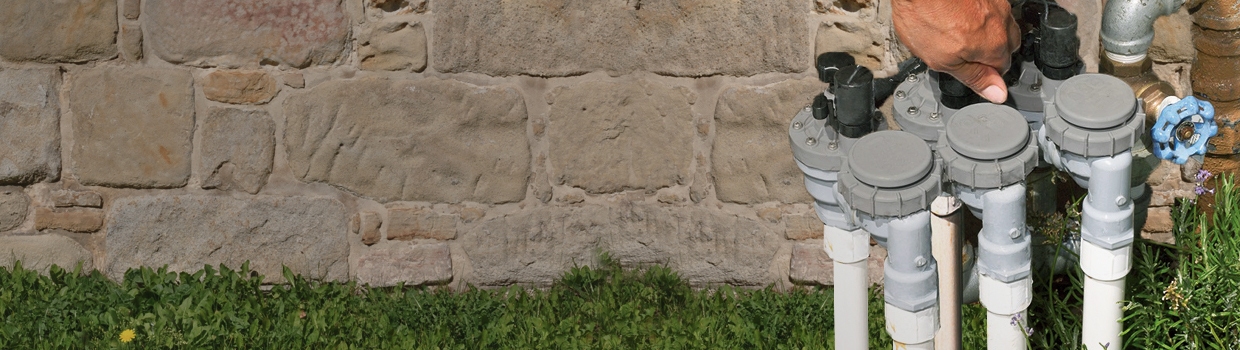
Sprinkler Warehouse offers manual valves in angle, inline, and anti-siphon configurations. When you don’t need an automatic valve, manual valves offer long-lasting durability.
Please re-enter quantity based on the required multiple
You are attempting to add items with a quantity which is not a multiple of the item's purchase quantity
Item # {partNumber} is sold in multiples of {minpackQty} {uom}
The quantity will be rounded up to {currQty} {uom} in your cart.
Do you want to proceed?
Sprinkler Valve Composition
Sprinkler valves are typically made from durable materials designed to withstand water pressure and environmental conditions. At Sprinkler Warehouse, you’ll mostly find manual water valves made of brass and a sturdy PVC plastic. Brass is commonly used because it is strong, resistant to corrosion, and ideal for high-pressure applications. PVC is common in residential irrigation systems because it keeps costs low while maintaining functionality.
Manual Valve FAQs
What are some of the advantages of manual valves?
For starters, manual sprinkler valves are cheaper than automatic valves, making them an easy way to save money. Furthermore, manual valves are comparatively easier to install, repair, and replace in case they become damaged. Some people also prefer manual valves simply because they have fewer components, reducing the risk of mechanical failure.
What is the difference between automatic and manual sprinkler valves?
Manual valves require physical operation to open or close the valve while automatic valves can be programmed to run at specific times, even when no one is present to turn them on. Automatic valves are generally more convenient, but manual valves can be less expensive and are easier to install.
What are common issues with manual sprinkler valves?
Some of the most common issues that you might experience with manual valves are leaks and stiff valve operation. These issues are usually caused by worn-out seals or gaskets, corrosion, or debris buildup. You can diagnose your problem by turning off the water supply, disassembling the valve and inspecting it for damaged parts. Clean or replace your faulty components as necessary then reassemble the valve and test it out.
Sign Up For Specials & Exclusive Discounts
Delivered directly to your inbox.
By inputting your email you agree to receive recurring promotional marketing emails from Sprinkler Warehouse.