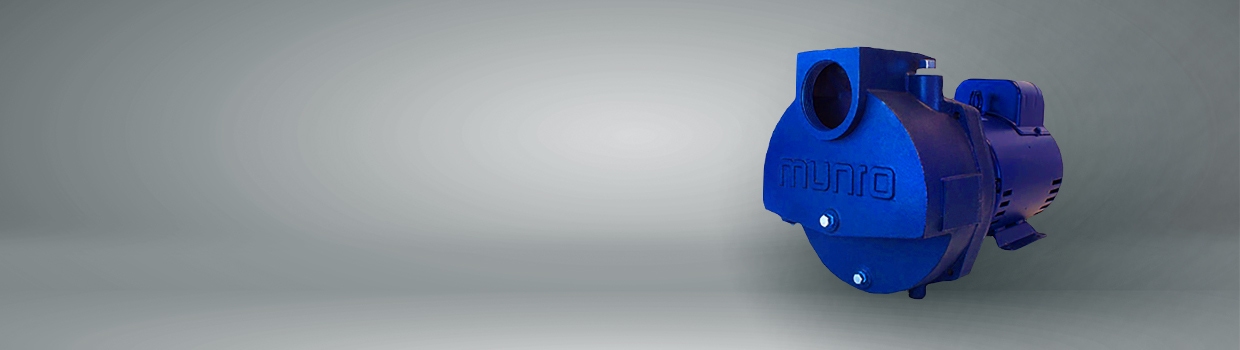
Our centrifugal pumps are built to professional standards, with today's latest design features and the durability of pumps built 60 years ago. These self-priming centrifugal pumps feature a rugged brass impeller and a cast iron diffuser, bracket, and casing. Designed for rugged, reliable performance, these pumps are ideal for irrigation and a variety of other pumping applications.
Please re-enter quantity based on the required multiple
You are attempting to add items with a quantity which is not a multiple of the item's purchase quantity
Item # {partNumber} is sold in multiples of {minpackQty} {uom}
The quantity will be rounded up to {currQty} {uom} in your cart.
Do you want to proceed?
How Centrifugal Pumps Work
Centrifugal water pumps use the principle of centrifugal force to efficiently transfer water into an irrigation system. The process starts with water being sucked into the side of the pump. From inside the pump, a rotating impeller creates a centrifugal force by rotating at a high speed. This pushes water outward to the edges of the pump casing. The pressurized water is then discharged through the outlet to the irrigation system.
Centrifugal Pump FAQs
Why are centrifugal pumps preferred?
One of the main benefits of centrifugal irrigation pumps are their high flow rate capabilities. Centrifugal pumps can handle large volumes of water efficiently while remaining easy to operate, maintain, and repair.
What is the best setting to use a centrifugal irrigation pump?
Centrifugal pumps are ideal for pumping water from sources such as ponds, rivers, lakes, reservoirs, or tanks. They work best when the water source is close to the pump and at the same or a slightly lower elevation. They can be used for small residential setups or scaled up for large agricultural or industrial applications.
Why is my pump losing pressure?
With a centrifugal sprinkler pump, loss of pressure will usually come from mechanical problems, pipe system problems, or issues with the water source. A couple of common causes include air leaks in the suction line, clogged filters or pipes, a damaged impeller, or insufficient water in the source.
Sign Up For Specials & Exclusive Discounts
Delivered directly to your inbox.
By inputting your email you agree to receive recurring promotional marketing emails from Sprinkler Warehouse.