hours left for
same day shipping


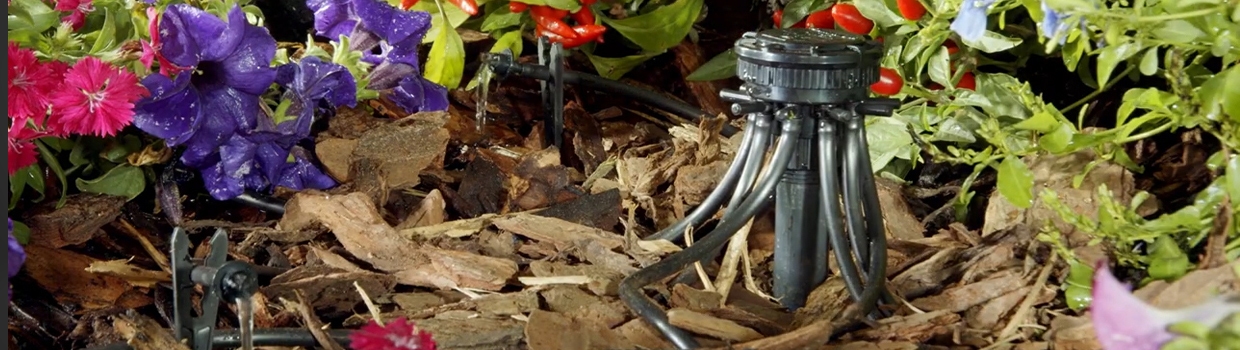
Drip emitter manifolds allow you to convert an existing sprinkler into a drip irrigation system. They act as a hub, splitting the water supply into several different drip lines, each leading to an emitter. Drip manifolds can come with 4, 6, 8, or 12 outlets, accommodating irrigation systems of all sizes. Some drip emitter manifolds also come with built-in pressure regulation, ensuring consistent water flow to each outlet. Order drip irrigation manifolds from Sprinkler Warehouse today.
Installing a drip irrigation manifold is like plugging a "power strip" into your garden. By screwing a multi-port manifold onto your existing underground pipe, you create a central hub where several smaller tubes connect to one main water source without digging up the yard. However, just plugging those tiny tubes into your main supply is risky. Standard home water pressure often exceeds 50 PSI (Pounds per Square Inch), which would pop delicate drip lines like an overfilled balloon. Therefore, installing an inline pressure regulator and filter is mandatory for your drip irrigation setup, instantly dropping that aggressive pressure down to a safe, steady 25 PSI.
To install a drip irrigation manifold, first plan out your watering zones. This will help you set up the manifold in a way that can accommodate an emitter in each section that needs one. Next, begin connecting the manifold to your watering system, usually a hose or riser, and attach tubing to the outlets. Also remember to use plugs or caps to close off any outlets on the manifold that you’re not using. This helps maintain system pressure. Once the tubing is securely attached, run them from each outlet to the desired plant or zone and attach any emitter of your choice to each end.
Drip lines can come in contact with soil and fertilizer while at work, so backflow prevention will be equally important. You can install any anti-siphon valve or pressure vacuum breaker that’s compatible with your setup. In almost every system, the backflow device should be installed before the filter, pressure regulator, and manifold. If you’re using an anti-siphon valve, remember to keep it above the highest downstream emitter, as this can interfere with its operation. Most codes require the valve to be mounted at least 6 to 12 inches higher than the highest downstream emitter.
A typical drip irrigation manifold usually has 2 to 12 outlets. However, there are models with more outlets, often used for larger systems or specialized irrigation setups. The number of outlets determines how many drip lines or emitters can be connected, so consider how big your irrigation system will be before choosing a drip manifold.
Yes, connecting different types of emitters to a drip irrigation system manifold is a great way to meet the diverse watering needs of various plants or zones. Just make sure that the total flow rate of all connected emitters does not exceed the capacity of the manifold or the water supply.
Drip manifolds can be installed underground, but should be placed inside a valve box. Burying a manifold directly in the soil can make it difficult to replace tubing or adjust individual drip zones. Keeping the manifold accessible also helps protect it from dirt, root intrusion, and accidental damage during maintenance.
To winterize your drip irrigation manifold, turn off the water supply and open the manifold valves or end caps to drain as much water as possible. Next, disconnect the supply line and clean out any debris. Leave the drain points open during storage, and protect the manifold by removing it until spring.
It is common practice to cap unused outlets on a drip emitter manifold to prevent leaks and maintain system pressure for the lines that are in use. Most manifolds come with compatible plugs or caps for sealing unused outlets.