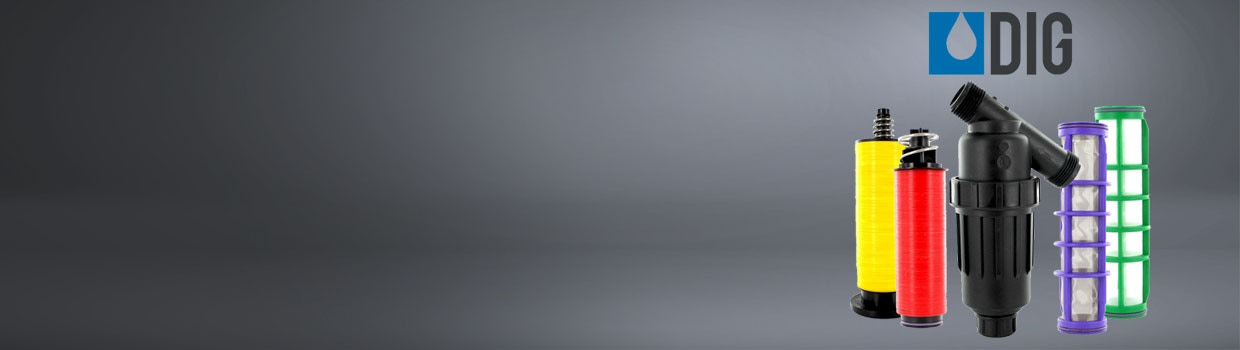
Drip irrigation uses very small water outlets, and those outlets can clog easily. Protect your entire system by installing a DIG drip irrigation filter. These filters can remove sediment, sand, debris, and other particles from the water before they reach critical components that could otherwise be clogged. Shop from a variety of disc and mesh DIG filters from Sprinkler Warehouse today.
Please re-enter quantity based on the required multiple
You are attempting to add items with a quantity which is not a multiple of the item's purchase quantity
Item # {partNumber} is sold in multiples of {minpackQty} {uom}
The quantity will be rounded up to {currQty} {uom} in your cart.
Do you want to proceed?
Is Your DIG Filter Clogged?
If water flow drops or emitters stop dripping evenly, you may be dealing with a clog. Dry spots in the landscape can also be a sign that debris is restricting flow. To check the filter, turn off the water, unscrew the filter housing, and remove the filter for examination. If it is coated with any sort of sediment, rinse it clean with water. For stubborn debris, you may need to use a soft brush. After reinstalling the filter, run the system and check whether normal flow returns. Filters should be inspected regularly, especially with well water or older plumbing.
DIG Filter FAQs
Do I need a filter for a DIG drip irrigation system?
Yes. A filter is recommended for most DIG drip irrigation systems. Drip emitters, micro-sprayers, and small tubing passages can clog from sediment, sand, rust, or other debris. A clean filter helps maintain even water flow and generally reduces the amount of maintenance for the entire system. Check and rinse the filter screen periodically, especially if you use well water or a faucet with mineral buildup.
What happens if I don’t use a filter with my irrigation system?
Without a filter, debris can enter the irrigation system and clog your emitters and small fittings. This can cause reduced flow or sections of the system to stop working completely. Sediment, sand, rust, algae, and mineral particles are especially common in well water or older plumbing systems.
Should the filter go before or after the pressure regulator?
The filter should be installed before the pressure regulator. This lets the filter catch sediment, sand, rust, and debris before they reach the regulator, drip tubing, emitters, or micro-sprayers. Some kits may arrange parts slightly differently, so check the DIG instructions for your specific kit.
Sign Up For Specials & Exclusive Discounts
Delivered directly to your inbox.
By inputting your email you agree to receive recurring promotional marketing emails from Sprinkler Warehouse.