Sign Up For Specials & Exclusive Discounts
Delivered directly to your inbox.
By inputting your email you agree to receive recurring promotional marketing emails from Sprinkler Warehouse.
By installing the right irrigation sensors, your system will be responsive to real conditions rather than running on a fixed schedule. Hunter rain sensors prevent watering during or after rainfall, which obviously prevents watering after they’re already watered. Freeze sensors stop irrigation when temperatures are too low, avoiding wasted water and potential ice damage. Soil moisture sensors water only when the soil is dry, further reducing overwatering. Wind sensors pause watering during high winds to prevent drift. By automatically adjusting or pausing irrigation, these sensors will save you tons of water over time.
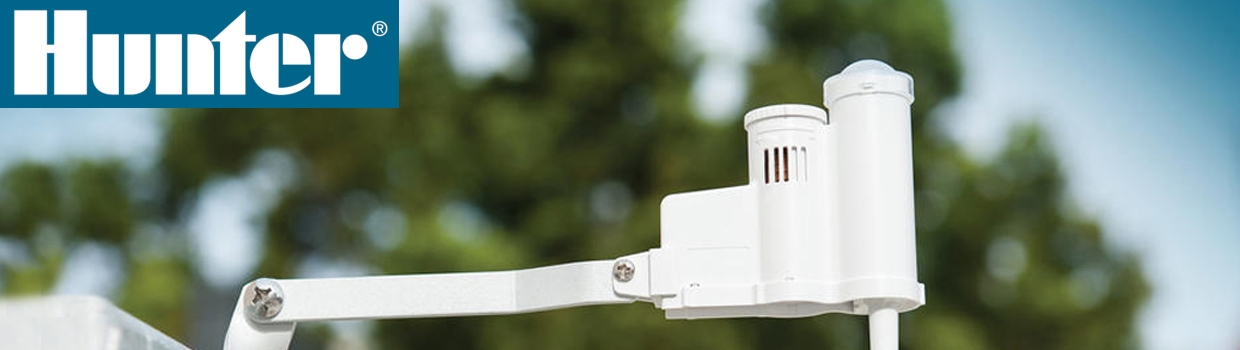
Hunter wireless rain sensors, such as those from the Rain-Clik series, operate based on the principles of rain detection and wireless communication to interrupt irrigation systems during or after rainfall. Once the rain sensor detects rainfall, it wirelessly communicates with the irrigation controller, which responds by temporarily halting the system’s scheduled watering cycle.
You can generally use Hunter sensors with most irrigation controllers that have a sensor input terminal. For example, Hunter soil moisture sensors are designed to pair with a variety of irrigation controllers, both from Hunter and other manufacturers.
A wind sensor helps irrigation systems conserve water by detecting high winds and temporarily pausing sprinkler operation. When strong wind is present, water from sprinklers can drift off-target, causing uneven coverage and water waste. The sensor signals the controller to delay watering until conditions improve, ensuring water reaches the intended lawn or garden areas. Wind sensors are especially useful in open, exposed landscapes or regions prone to frequent high winds.
If your irrigation system isn’t running after installing a sensor, it’s usually because the sensor is preventing the controller from activating. Some of the most common issues are if the sensor is wet or hasn’t reset (rain or freeze sensors), improper wiring to the controller, the sensor is installed in a sheltered or shaded location that prevents accurate readings, or the controller’s sensor override is enabled.
Generally, installing and managing a Hunter soil moisture sensor involves inserting the sensor into the soil, connecting it to the irrigation controller, and adjusting the moisture levels based on the needs of the landscape. To ensure that it continues working properly, check the probe and wiring every season and clean away debris whenever necessary.